AC running but not cooling is a common problem, especially during hot weather. You may notice that the system appears to operate normally, but the air coming from the vents isn’t cold and the temperature inside your home barely changes.
An AC that runs without properly cooling the house can have several possible causes. Some are simple problems you can check yourself, while others require professional HVAC diagnostics and repair.
Below, we’ll look at the most common reasons an air conditioner stops cooling and what you can do about them.
Why Is My Air Conditioner Running but Not Cooling?
An air conditioning system doesn’t simply produce cold air. It removes heat from inside your home and transfers that heat outdoors.
If airflow becomes restricted, refrigerant levels are incorrect, or one of the system’s major components isn’t operating properly, this heat-transfer process can become much less effective.
As a result, the AC may continue running even though your home isn’t getting cooler.
Common causes include:
- Incorrect thermostat settings
- A clogged or dirty air filter
- Restricted airflow
- A frozen evaporator coil
- Low refrigerant or a refrigerant leak
- Problems with the outdoor condenser unit
- Leaking or damaged ductwork
- Electrical or mechanical component failure
Let’s take a closer look at each problem.
1. Check Your Thermostat First
Before assuming something is wrong with the AC equipment, take a look at the thermostat.
Make sure the system is set to COOL and that the selected temperature is lower than the current indoor temperature.
Also check the fan setting. If the thermostat is set to FAN ON, the blower may continue circulating air even when the air conditioner isn’t actively cooling. This can make it seem like the AC is blowing warm or room-temperature air.
If your thermostat uses batteries and the display looks weak or inconsistent, replacing the batteries is another simple troubleshooting step.
2. Inspect the Air Filter
A dirty air filter is one of the easiest AC problems to overlook.
As dust and debris accumulate on the filter, less air can move through the HVAC system. Reduced airflow makes it harder for the air conditioner to cool the home efficiently and can force the equipment to operate for longer periods.
You may notice:
- Weak airflow from supply vents
- Longer cooling cycles
- More dust around vents
- Uneven temperatures throughout the house
- Higher energy consumption
If the filter appears heavily covered with dust, replacing it may improve airflow immediately.
How frequently a filter needs replacement depends on the filter type, household conditions, pets, indoor air quality, and how often the HVAC system operates.
3. Look for a Frozen Evaporator Coil
Ice on an air conditioner might sound like a sign that the system is getting extremely cold, but it usually indicates a problem.
The evaporator coil needs adequate airflow to absorb heat properly. When airflow becomes restricted—or when another system issue is present—the coil temperature can drop enough for moisture to freeze on its surface.
Possible signs of a frozen coil include:
- Ice around refrigerant lines
- Weak airflow
- AC running without cooling
- Water around the indoor unit after the ice begins melting
If you notice ice, turn off the cooling system and allow the coil to thaw completely.
Simply removing the ice doesn’t necessarily solve the underlying problem. If the coil freezes again, professional inspection is recommended because the cause could involve airflow restrictions, refrigerant problems, or another mechanical issue.
4. Low Refrigerant or a Refrigerant Leak
Refrigerant plays a critical role in moving heat from inside your home to the outdoors.
Unlike fuel, refrigerant isn’t normally something an AC system should regularly consume. If the refrigerant level becomes too low, there may be a leak somewhere in the system.
Possible warning signs include:
- AC blowing air that isn’t cold
- Longer-than-normal cooling cycles
- Ice forming on refrigerant lines
- Hissing or bubbling noises
- Difficulty reaching the thermostat setting
Refrigerant problems should be handled by a qualified HVAC technician. Simply adding more refrigerant without identifying the reason it became low may leave the original problem unresolved.
A technician can inspect the system, locate potential leaks, determine whether repairs are necessary, and verify that the refrigerant charge meets the manufacturer’s specifications.
5. Check the Outdoor AC Unit
Your outdoor condenser is responsible for releasing heat collected from inside the house.
Because the unit sits outside, leaves, grass, dirt, and other debris can accumulate around it and interfere with airflow.
Take a look around the condenser and make sure there is adequate open space surrounding it. Remove loose leaves and vegetation that may be blocking airflow.
While the system is operating, you can also observe whether the outdoor fan is running.
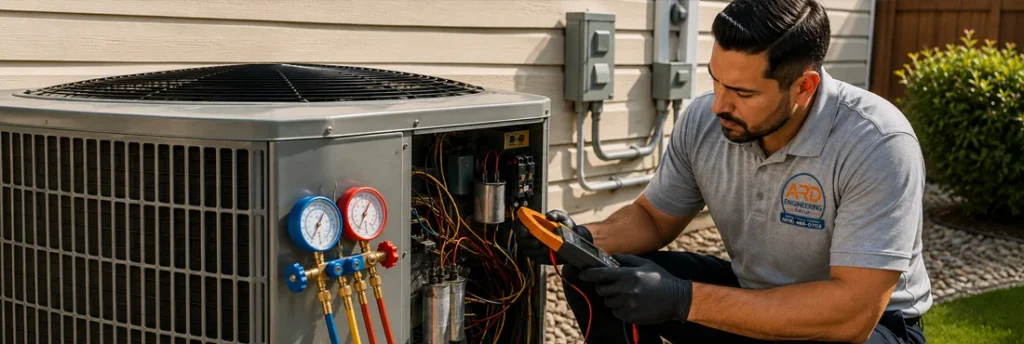
Problems such as a failed condenser fan motor, capacitor, electrical component, or compressor usually require professional diagnosis.
6. Your Ductwork May Be Losing Conditioned Air
Sometimes the air conditioner itself is working properly, but the cooled air isn’t reaching the rooms where it’s needed.
Leaks, disconnected sections, or damaged ductwork can allow conditioned air to escape into attics, crawl spaces, garages, or other unconditioned areas.
Possible symptoms include:
- Certain rooms staying warmer than others
- Weak airflow from specific vents
- AC running for unusually long periods
- Difficulty maintaining a comfortable indoor temperature
A professional duct inspection can help determine whether air leakage or damaged ductwork is contributing to the cooling problem.
What Should You Check Before Calling an HVAC Technician?
If your AC suddenly stops cooling, a few basic checks may help identify a simple problem.
Start by checking:
- Thermostat — Confirm that it is set to COOL and the temperature is set correctly.
- Air filter — Replace it if it is visibly dirty or clogged.
- Supply vents — Make sure vents are open and not blocked by furniture or other objects.
- Indoor unit — Look for visible ice or excessive water.
- Outdoor condenser — Check for debris and confirm that airflow around the unit isn’t obstructed.
- Electrical panel — Check whether an HVAC-related circuit breaker has tripped.
If these basic checks don’t restore normal cooling, further troubleshooting should generally be left to an HVAC professional.
When Should You Call an HVAC Professional?
Some air conditioning problems aren’t appropriate for DIY repair.
Professional service is recommended when:
- The evaporator coil repeatedly freezes
- Refrigerant lines are covered with ice
- You hear unusual mechanical noises
- The outdoor fan isn’t operating
- The AC repeatedly trips a circuit breaker
- You suspect a refrigerant leak
- Airflow remains weak after replacing the filter
- The system runs continuously without reaching the desired temperature
- The AC stops cooling again shortly after troubleshooting
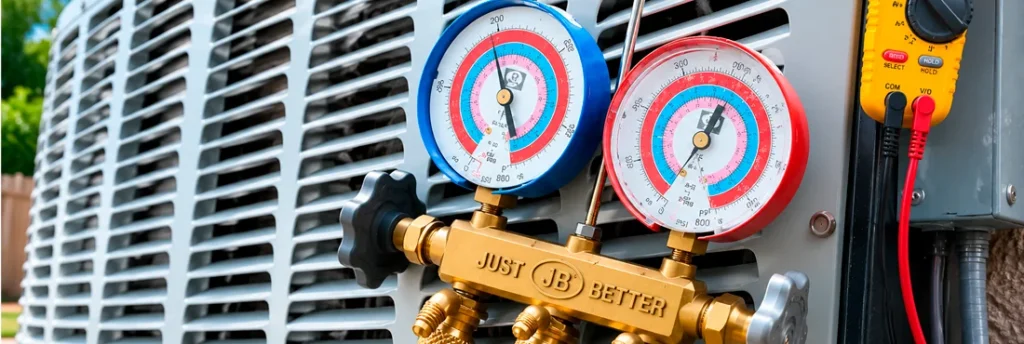
A professional technician can test electrical components, measure system pressures and temperatures, inspect refrigerant levels, evaluate airflow, and identify problems that aren’t visible during a basic homeowner inspection.
Why You Shouldn’t Ignore an AC That Isn’t Cooling
An air conditioner that isn’t cooling properly may continue operating for long periods while trying to reach the thermostat setting.
That can increase energy consumption and place additional stress on system components.
A relatively small airflow or maintenance problem can also contribute to larger equipment problems if it isn’t corrected.
Addressing cooling issues early can help improve comfort, restore system efficiency, and potentially reduce the risk of more expensive repairs.
How to Help Prevent AC Cooling Problems
Regular HVAC maintenance can reduce the likelihood of unexpected cooling problems during hot weather.
Homeowners can help by:
- Checking and replacing air filters regularly
- Keeping supply and return vents unobstructed
- Removing vegetation and debris from around the outdoor unit
- Watching for unusual noises or changes in airflow
- Scheduling routine HVAC maintenance
- Having recurring cooling problems inspected instead of repeatedly resetting the system
Preventive maintenance also gives technicians an opportunity to identify worn or malfunctioning components before they cause a complete system failure.
| Issue | DIY Fix? | Time | Cost Range | Call Pro? |
|---|---|---|---|---|
| Thermostat | Yes | 1 min | $0 | No |
| Air filter | Yes | 5 min | $10–$30 | No |
| Frozen coil | Sometimes | 1 hour | $0–$300 | Maybe |
| Refrigerant leak | No | — | $200–$1,500 | Yes |
| Compressor failure | No | — | $1,000–$2,500 | Yes |
Get Your AC Cooling Properly Again
If you’ve checked the thermostat, filter, vents, and outdoor unit but your air conditioner still isn’t cooling properly, the problem may require professional diagnosis.
A qualified HVAC technician can identify the cause, recommend the appropriate repair, and help restore reliable cooling before a minor issue develops into a more serious system failure.
For homeowners in Los Angeles and Surrounding areas, ARD Engineering Group provides professional HVAC diagnostics, repair, maintenance, and system services to help keep homes comfortable throughout the cooling season.