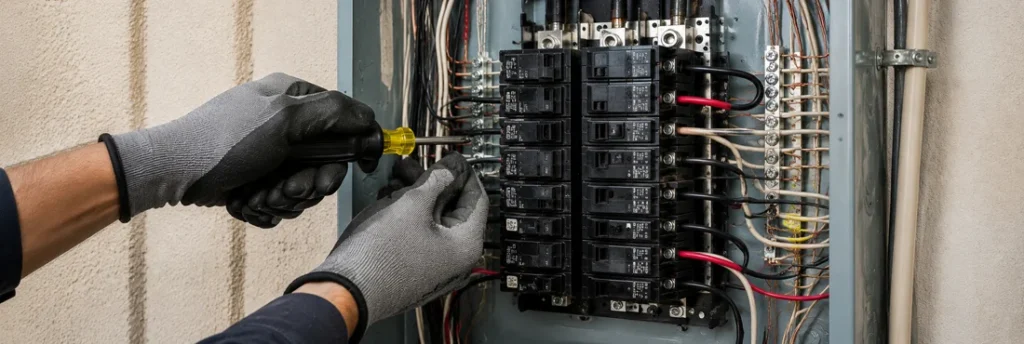
Electrical panel repair in Adelanto can help address tripping breakers, damaged wiring, flickering lights, and other electrical problems that may affect your home’s safety. From lighting and kitchen appliances to air conditioning, EV chargers, and home electronics, almost everything depends on properly functioning wiring and electrical equipment.
When an electrical panel begins malfunctioning or wiring becomes damaged, the problem may initially seem minor. A breaker may trip occasionally, lights may flicker, or an outlet may stop working. However, these symptoms can sometimes indicate a larger electrical issue that should not be ignored.
For homeowners in Adelanto, California, professional electrical troubleshooting can help identify the source of the problem and determine whether the system needs a simple repair, wiring work, or an electrical panel upgrade.
Why Is the Electrical Panel So Important?
The electrical panel is the central distribution point for electricity throughout your home.
Power enters the property through the electrical service and is distributed from the panel to individual circuits. These circuits supply electricity to different areas and equipment throughout the house, including:
- Lighting
- Electrical outlets
- Kitchen appliances
- HVAC equipment
- Water heaters
- Washers and dryers
- Garage circuits
- EV chargers
- Home electronics
- Other electrical equipment
Inside the panel, circuit breakers provide protection by interrupting electrical current when certain unsafe conditions occur.
Because so many parts of the home depend on the electrical panel, problems inside it can affect anything from a single outlet to multiple areas of the property.
Common Signs of Electrical Panel Problems
Electrical panel problems don’t always cause a complete power failure.
In many cases, the system continues operating while producing warning signs.
Frequently Tripping Circuit Breakers
A circuit breaker may occasionally trip because of temporary overload.
If the same breaker repeatedly trips, however, there may be an underlying electrical problem.
Possible causes include:
- Circuit overload
- Short circuit
- Ground fault
- Damaged wiring
- Faulty appliance
- Loose connection
- Defective circuit breaker
Repeatedly resetting a breaker without identifying the cause is not a proper solution.
Burning Smell
A burning or unusual electrical odor near the panel, outlet, or switch should never be ignored.
Overheated wiring, damaged insulation, loose connections, and failing electrical components can all produce excessive heat.
If you notice a persistent burning smell around electrical equipment, the affected system should be inspected.
Buzzing or Crackling Sounds
Electrical panels normally operate quietly.
Persistent buzzing, crackling, popping, or arcing sounds may indicate a loose connection or another electrical fault.
These symptoms deserve professional attention.
Excessive Heat
Some electrical components may feel slightly warm during normal operation.
However, a breaker, panel, outlet, or switch that becomes unusually hot may indicate excessive current, poor connections, or another electrical problem.
Flickering Lights
A single flickering light may simply have a loose bulb or fixture problem.
If lights repeatedly flicker throughout several areas of the home, the cause may be related to wiring, electrical connections, or the power distribution system.
Why Does Electrical Wiring Need Repair?
The electrical panel is only one part of a home’s electrical system.
Wiring runs throughout walls, ceilings, attics, garages, and other areas of the property.
Damage can occur even when the electrical panel itself appears to be working normally.
Aging Electrical Wiring
Older wiring doesn’t automatically mean unsafe wiring.
However, electrical demands have changed significantly over the years.
Modern households may simultaneously operate:
- Central air conditioning
- Heat pumps
- Computers
- Large televisions
- Electric kitchen appliances
- Electric dryers
- EV charging equipment
- Smart-home devices
- Home-office equipment
An electrical system originally designed for much lower demand may eventually require additional circuits or other upgrades.
Damaged Wire Insulation
Electrical conductors are surrounded by insulation designed to keep them separated from one another and other conductive materials.
Insulation can deteriorate because of:
- Age
- Excessive heat
- Physical damage
- Moisture
- Rodents
- Improper installation
- Previous remodeling work
Damaged insulation can expose electrical conductors and increase the risk of short circuits, arcing, and electrical shock.
Loose Electrical Connections
Electrical connections need to remain secure.
Loose connections can occur inside:
- Outlets
- Switches
- Junction boxes
- Light fixtures
- Electrical panels
- Other electrical equipment
A poor connection can create resistance and excessive heat.
Over time, this can damage wiring and surrounding electrical components.
Improper Previous Electrical Work
Homes are often modified over many years.
New outlets may be installed, circuits added, appliances replaced, garages converted, or HVAC equipment upgraded.
If previous electrical work wasn’t completed correctly, problems may remain hidden until the system experiences increased demand or a component begins to fail.
Potential problems can include incorrectly sized breakers, improper wiring connections, missing grounding, overloaded circuits, or poorly installed electrical equipment.
Electrical Panel Repair or Replacement?
Not every electrical panel problem requires complete replacement.
In some cases, the appropriate solution may be a targeted repair.
Possible repairs include:
- Replacing a defective breaker
- Repairing loose electrical connections
- Correcting damaged wiring
- Repairing improperly connected circuits
- Replacing damaged conductors
- Correcting grounding or bonding problems
However, replacing or upgrading the panel may make more sense when the existing equipment is outdated, damaged, undersized, or no longer suitable for the home’s electrical needs.
Professional inspection should determine which option is appropriate.
When Should You Consider an Electrical Panel Upgrade?
A panel upgrade may become necessary when a home’s electrical requirements increase significantly.
Installing an EV Charger
Electric vehicle charging can add substantial electrical demand.
Before installing an EV charger, the existing service and electrical panel should be evaluated to determine whether they can safely support the additional load.
Installing New HVAC Equipment
Modern air conditioners, heat pumps, electric heating equipment, and other HVAC systems may require dedicated electrical circuits.
In some situations, upgrading HVAC equipment also means evaluating the home’s electrical capacity.
Adding High-Power Appliances
Electric ranges, dryers, water heaters, and similar equipment can significantly increase electrical demand.
The existing system should have enough capacity to support these loads.
Remodeling Your Home
Adding rooms, converting a garage, building an addition, or significantly remodeling a property may require new circuits and additional electrical capacity.
Lack of Available Circuit Space
Sometimes a panel simply doesn’t have enough appropriate space for additional circuits.
An electrician can determine whether the existing panel can be modified safely or whether an upgrade is the better solution.
What Happens During an Electrical Panel Inspection?
Before recommending a repair or replacement, an electrician should evaluate the existing electrical system.
The inspection may include checking:
- Overall panel condition
- Circuit breakers
- Electrical connections
- Signs of overheating
- Wiring condition
- Grounding
- Bonding
- Circuit loading
- Electrical service capacity
- Previous modifications
- Available panel capacity
If you’re planning to install major new equipment, the electrician may also evaluate whether the current electrical service can support the additional load.
The goal is to identify the actual problem before recommending a solution.
Electrical Wiring Repair
Wiring problems can vary considerably in size.
Some repairs involve a single outlet or circuit, while others may require work in several areas of the home.
Common electrical wiring services include:
- Repairing damaged circuits
- Replacing damaged wiring
- Correcting loose connections
- Installing dedicated circuits
- Replacing outdated wiring where necessary
- Repairing grounding problems
- Replacing damaged outlets and switches
- Troubleshooting circuits that have lost power
Because much of a home’s wiring is hidden inside walls and ceilings, professional testing may be required to locate the source of a problem.
Why Circuit Breaker Size Matters
When a breaker repeatedly trips, replacing it with a higher-amperage breaker is not a safe shortcut.
Circuit breakers must be properly matched to the wiring and electrical load.
If a breaker allows more current than the circuit conductors can safely carry, the wiring may overheat before the breaker provides protection.
The correct solution is to determine why the existing breaker is tripping.
The circuit may be overloaded, the wiring may be damaged, an appliance may have a fault, or another electrical issue may be present.
Electrical Safety in Older Homes
Older homes can have perfectly functional electrical systems, but they may also contain equipment installed under older standards or modified during previous renovations.
An electrical inspection may be worth considering when:
- The electrical panel is significantly older
- The home still has two-prong outlets
- The history of previous electrical work is unknown
- Breakers repeatedly trip
- Outlets or switches become unusually warm
- Lights frequently flicker
- You are planning to install major electrical equipment
An inspection doesn’t automatically mean everything needs to be replaced.
The purpose is to determine which components remain serviceable and which areas may require repair or modernization.
Don’t Ignore Electrical Warning Signs
Electrical problems rarely correct themselves.
A breaker that continually trips, a hot outlet, unusual electrical sounds, or a burning smell may indicate a problem that requires attention.
Continuing to operate a damaged circuit can potentially make the situation worse.
If a breaker immediately trips after being reset, avoid repeatedly turning it back on.
The underlying cause should be identified first.
Can You Repair an Electrical Panel Yourself?
Electrical panel work can expose a person to dangerous voltage and high levels of fault current.
Turning off individual breakers does not necessarily mean that every component inside the panel is de-energized.
For this reason, panel repairs, service modifications, and significant wiring work should generally be handled by a qualified electrician.
Professional electricians have the appropriate testing equipment and knowledge to identify electrical faults and complete repairs safely.
How Can You Help Prevent Electrical Problems?
Some electrical failures happen unexpectedly, but regular attention to your home’s electrical system can help identify developing problems.
Homeowners should avoid:
- Using damaged extension cords
- Ignoring warm or discolored outlets
- Repeatedly resetting tripping breakers
- Overloading outlets with multiple high-power devices
- Making temporary wiring repairs
- Using electrical equipment with damaged plugs
It is also a good idea to have the electrical system evaluated before installing major equipment that will significantly increase power demand.
Professional Electrical Panel and Wiring Repair in Adelanto, CA
Electrical problems can range from a defective circuit breaker or loose connection to damaged wiring or insufficient electrical capacity.
The right solution begins with accurate troubleshooting.
ARD Engineering Group provides professional electrical panel repair, wiring repair, electrical troubleshooting, preventive maintenance, panel upgrades, and other residential electrical services in Adelanto and surrounding areas.
Whether you’re dealing with repeated breaker trips, older wiring, electrical panel problems, or planning to install an EV charger or new HVAC equipment, a professional inspection can help determine what your electrical system actually needs.
Properly diagnosed and completed electrical repairs can help restore reliable operation while improving the safety and functionality of your home’s electrical system.