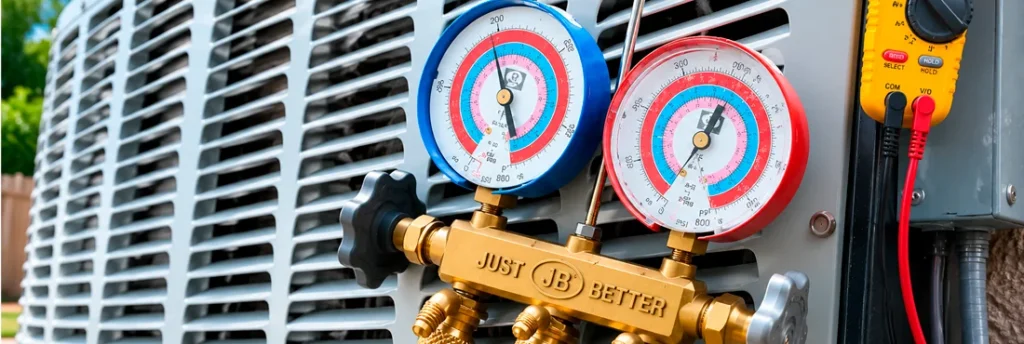
A grounded AC compressor is a serious electrical problem that can cause an air conditioning system to stop working completely. When a compressor becomes grounded, an internal electrical fault creates a path between the motor windings and the compressor shell or ground.
What Does “Grounded-Out Compressor” Mean?
The compressor is one of the most important components of an air conditioning system. It circulates refrigerant and allows the system to transfer heat out of the home.
A grounded compressor typically means that the electrical insulation inside the compressor has failed, allowing current to flow where it should not.
Common signs may include:
- Circuit breaker repeatedly tripping
- Blown fuses
- Compressor not starting
- Abnormal electrical readings
- Unusual electrical or burning smell
- AC system failing to cool the home
A technician can perform electrical tests to determine whether the compressor is actually grounded before recommending replacement.
Why Is AC Replacement Sometimes Recommended?
Finding a grounded compressor does not automatically mean the entire AC system must be replaced. The right decision depends on the age and condition of the equipment, warranty coverage, repair costs, refrigerant type, and compatibility of the existing system.
For an older system, replacing the entire unit may make more financial sense. Compressor replacement involves significant labor, refrigerant recovery and recharge, and other materials. If additional components are already aging, investing heavily in the existing system may provide limited long-term value.
A newer system, however, may be a good candidate for compressor replacement—especially when the compressor is covered by the manufacturer’s warranty and the rest of the equipment is in good condition.
What Happens During Diagnosis?
Before recommending a repair or replacement, an HVAC technician should properly diagnose the system.
The technician may inspect the electrical components, check supply voltage, test the compressor terminals and windings, and perform resistance or insulation testing. Other possible causes of the system failure should also be ruled out.
Accurate diagnosis is important because replacing an AC system is a significant investment.
Compressor Replacement vs. Complete AC Replacement
Compressor replacement may make sense when:
- The AC system is relatively new
- The compressor is under warranty
- The remaining components are in good condition
- The repair cost is substantially lower than replacement
Complete AC replacement may make more sense when:
- The system is older
- The compressor is no longer under warranty
- Other major components are deteriorating
- Repair costs are approaching the cost of replacement
- The existing equipment is inefficient or difficult to service
The best choice should be based on the condition of the entire HVAC system, not simply the failed compressor.
What to Expect If the AC Unit Is Replaced
If replacement is the better option, the technician should evaluate both the outdoor and indoor equipment to ensure the new components are properly matched.
The process may include refrigerant recovery, removal of the old equipment, installation of the replacement unit, electrical inspection or modifications, evacuation and charging of the refrigerant system, and complete operational testing.
After installation, pressures, temperatures, voltage, amperage, and overall system performance should be verified.
Should You Repair or Replace a Grounded AC Compressor?
There isn’t one answer that applies to every system.
For a newer AC unit with warranty coverage, replacing the compressor may be the most economical solution. For an older system with additional wear or expensive repairs ahead, replacing the equipment may provide better long-term value.
If you’ve been told that your AC compressor is grounded, ask for the diagnostic results and compare the cost of compressor replacement with the cost of a new system before making a decision.
Need a second opinion on an AC compressor problem?
ARD Engineering Group provides professional HVAC diagnostics, repair, and replacement services throughout Los Angeles and surrounding areas.
📞 (818) 488-0703