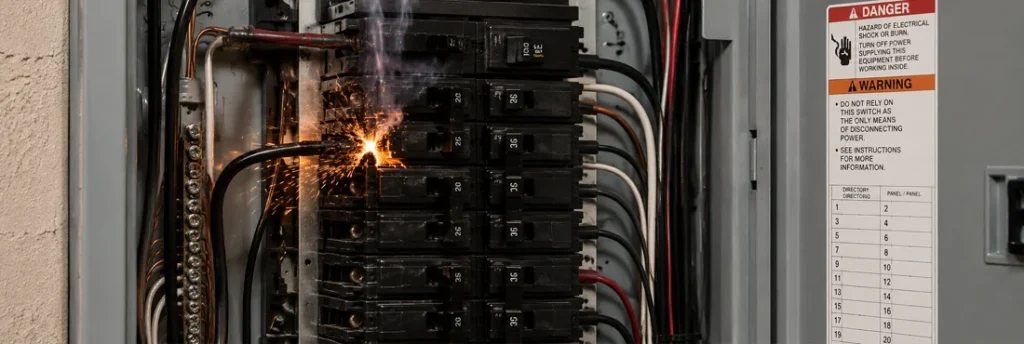
A circuit breaker that suddenly trips, a burning smell near an outlet, or unexpected sparks can indicate a serious electrical problem. One possible cause is a short circuit.
Short circuits can occur in outlets, switches, appliances, electrical panels, or wiring hidden inside walls. While a circuit breaker is designed to interrupt dangerous current, the underlying problem should never be ignored.
Understanding what a short circuit is, why it happens, and how to recognize the warning signs can help homeowners respond safely and know when it’s time to call a professional electrician.
What Is a Short Circuit?
A short circuit occurs when electrical current travels through an unintended path with very low resistance instead of following the normal circuit.
Under normal conditions, electricity flows through wiring to a load such as a light fixture, appliance, or other electrical device. When an unintended low-resistance connection develops, the amount of current can increase dramatically.
This sudden increase in current can generate significant heat and may cause the circuit breaker to trip.
Without proper electrical protection, a short circuit can damage wiring and equipment and increase the risk of fire or electrical shock.
What Happens During a Short Circuit?
A home’s electrical system is designed to carry a specific amount of current.
When a short circuit develops, electrical resistance can drop sharply. According to Ohm’s law, lower resistance at a given voltage results in higher current.
The sequence can happen extremely quickly:
- Electricity finds an unintended low-resistance path.
- Current rises rapidly.
- Wiring and electrical components can begin heating.
- The circuit breaker or fuse should interrupt the circuit.
- If the fault isn’t properly interrupted, electrical components can become damaged and the risk of fire increases.
This is one reason circuit breakers, fuses, GFCIs, and AFCIs play such important roles in residential electrical safety. For additional information about home wiring, electrical panels, circuit breakers, and protective devices, homeowners can visit the Electrical Safety Foundation International’s guide to home electrical systems.
What Causes a Short Circuit?
Short circuits can develop for many reasons, from aging wiring to accidental physical damage.
Damaged Wire Insulation
Electrical conductors are surrounded by insulation that keeps them separated from one another and from other conductive materials.
As insulation becomes damaged, cracked, melted, or worn away, conductors may come into contact where they shouldn’t.
This can create a short circuit.
Insulation damage can result from age, overheating, improper installation, physical damage, or pests.
Loose Electrical Connections
Wires and terminals inside outlets, switches, junction boxes, and electrical panels need secure connections.
A loose connection can create excessive heat or electrical arcing and may eventually lead to a dangerous fault.
If an outlet feels unusually warm, makes crackling sounds, or shows signs of discoloration, it should be inspected.
Damaged Power Cords
A short circuit doesn’t necessarily originate in your home’s permanent wiring.
Appliance cords and extension cords can also become damaged.
Bent plugs, exposed conductors, crushed cords, and deteriorated insulation can create electrical hazards.
Damaged cords should be replaced rather than temporarily repaired and continued in service.
Moisture Around Electrical Components
Water and electricity are a dangerous combination.
Moisture entering an outlet, junction box, appliance, or other electrical equipment can create an unintended conductive path.
Areas around kitchens, bathrooms, garages, exterior outlets, and other potentially damp locations require appropriate electrical protection.
Rodent or Pest Damage
Rodents can chew through wire insulation in attics, crawl spaces, garages, and walls.
Once insulation is damaged, exposed conductors can create electrical faults.
Because this type of damage may remain hidden, unexplained breaker trips or electrical problems sometimes require inspection of concealed wiring.
Incorrect Electrical Work
Improper wiring, incorrect connections, undersized conductors, poorly installed devices, or other installation mistakes can create dangerous electrical conditions.
Electrical work should be performed according to applicable codes and requirements.
Short Circuit vs. Overload: What’s the Difference?
A short circuit and an overloaded circuit can both cause a breaker to trip, but they are not the same problem.
An overload occurs when too many electrical loads are connected to a circuit and the total current demand exceeds what the circuit is designed to handle.
A short circuit, on the other hand, occurs when current takes an unintended low-resistance path.
For example, running several high-power appliances from the same circuit may cause an overload.
Damaged wiring that allows conductors to make unintended contact may create a short circuit.
Determining which condition is causing repeated breaker trips is important because the solutions are different.
Short Circuit vs. Ground Fault
A ground fault is another type of electrical fault that is sometimes confused with a short circuit.
A ground fault occurs when current unintentionally travels toward ground, such as through grounded metal equipment or another unintended conductive path.
Ground faults are particularly concerning in locations where people may come into contact with electricity and moisture.
This is why Ground-Fault Circuit Interrupters (GFCIs) are commonly used in areas where electrical equipment may be exposed to water.
What Is an Arc Fault?
An arc fault occurs when electricity jumps across a gap between conductors or damaged electrical connections.
Electrical arcing can generate extremely high temperatures.
Common causes can include:
- Damaged wiring
- Loose connections
- Crushed electrical cables
- Deteriorated insulation
- Damaged cords
Arc-Fault Circuit Interrupters (AFCIs) are designed to detect certain dangerous arcing conditions and disconnect the circuit.
Common Signs of a Short Circuit
Some short circuits cause an immediate breaker trip, while others may first produce warning signs.
Watch for:
- Circuit breakers that repeatedly trip
- Burning or unusual electrical odors
- Sparks from outlets or switches
- Black or brown discoloration around outlets
- Melted plastic
- Crackling or buzzing sounds
- Flickering lights
- Outlets that suddenly stop working
- Unusually warm outlets or switches
One symptom alone doesn’t necessarily confirm a short circuit, but these signs shouldn’t be ignored.
Why Are Short Circuits Dangerous?
The primary concern is the amount of current that can flow through a low-resistance path.
That current can create several hazards.
Electrical Fire
Excessive current can heat wiring and surrounding materials.
If insulation or nearby combustible materials become hot enough, an electrical fire may result.
Electric Shock
Damaged wiring or energized metal components can create a shock hazard.
This is particularly dangerous when moisture is involved.
Damage to Appliances and Electronics
Electrical faults can damage connected equipment and sensitive electronic components.
Damage to Wiring
Excessive heat can melt insulation and damage conductors.
What begins as a fault in one location may therefore require repairs beyond the original damaged component.
Damage Inside the Electrical Panel
A serious fault can also affect breakers, connections, bus components, or other equipment inside the electrical panel.
Electrical panel damage should always be evaluated by a qualified electrician.
What Should You Do If You Suspect a Short Circuit?
Electrical faults require caution.
If you notice smoke, severe overheating, active sparking, or another immediate electrical hazard, stay away from the affected equipment and address the emergency appropriately.
If it can be done safely, power to the affected circuit can be switched off at the breaker.
Do not repeatedly reset a breaker that immediately trips again.
A breaker that continues tripping is indicating that a problem may still be present.
Avoid opening electrical panels, removing outlets, or touching exposed wiring unless you are properly qualified to perform electrical work.
Why Does My Breaker Keep Tripping?
A breaker can trip for several reasons, so repeated trips don’t automatically mean you have a short circuit.
Possible causes include:
- Circuit overload
- Short circuit
- Ground fault
- Damaged appliance
- Wiring problem
- Loose electrical connection
- Faulty electrical component
Pay attention to when the breaker trips.
If it happens immediately after a particular appliance is connected or turned on, the appliance or its circuit may need inspection.
If the breaker trips even with appliances disconnected, the problem may be somewhere in the permanent wiring or electrical equipment.
Professional testing can identify the actual cause.
How Can You Help Prevent Short Circuits?
Not every electrical failure can be predicted, but several precautions can reduce risk.
Replace Damaged Cords
Don’t continue using electrical cords with cracked insulation, exposed wiring, damaged plugs, or evidence of overheating.
Avoid Improper Electrical Modifications
Temporary fixes and incorrectly installed electrical components can create long-term safety problems.
Electrical repairs should be completed correctly rather than simply made to “work.”
Keep Electrical Equipment Away From Water
Use appropriate electrical protection in locations where moisture may be present.
Exterior electrical components should also be properly rated and protected for their environment.
Pay Attention to Your Electrical Panel
Buzzing, burning odors, excessive heat, visible damage, or repeated breaker trips can indicate a problem requiring inspection.
Don’t Ignore Warning Signs
Small electrical symptoms can sometimes appear before a more serious failure.
Discolored outlets, intermittent power, unusual smells, or repeated breaker trips deserve attention.
Consider an Electrical Inspection
An inspection can be particularly useful in older homes, after water damage, when purchasing a property, or when unexplained electrical problems continue occurring.
When Should You Call an Electrician?
Some electrical issues require professional diagnosis rather than DIY troubleshooting.
Contact an electrician if:
- A breaker repeatedly trips
- An outlet or switch shows burn marks
- You smell burning near electrical equipment
- You hear buzzing or crackling from wiring or the panel
- An outlet produces sparks
- Wiring has been exposed to water
- You suspect damaged wiring inside a wall
- Part of your home unexpectedly loses power
- The electrical panel becomes unusually hot
An electrician can isolate the affected circuit, test wiring, inspect connections, identify damaged components, and determine what repairs are required.
Professional Electrical Troubleshooting and Repair
A short circuit isn’t something that should be diagnosed by guessing or repeatedly resetting a circuit breaker.
If you’re experiencing recurring breaker trips, burning smells, unusual electrical noises, damaged outlets, or other warning signs, a professional inspection can identify the source of the problem and determine the appropriate repair.
ARD Engineering Group provides professional electrical diagnostics, repair, preventive maintenance, and electrical system services throughout Los Angeles and surrounding areas.
Proper troubleshooting can help locate damaged wiring, faulty connections, overloaded circuits, and other electrical problems before they lead to more extensive damage.