A shorted HVAC transformer can cause an air conditioning system to suddenly stop cooling or lose power. While the compressor, refrigerant, or thermostat may seem like the obvious cause, the problem can be hidden in the electrical components supplying power to the HVAC equipment.
During a recent HVAC service call, the air conditioning system was not operating and had lost power. Troubleshooting led to an electrical transformer—and ultimately to a short circuit that was causing the breaker to trip.
The Problem: AC Not Cooling and No Power
The first obvious symptom was simple: the air conditioning system was not cooling.
Further inspection showed that there was no power where it should have been available. A tripped circuit breaker was another important clue that the problem could be electrical rather than a typical mechanical AC failure.
A breaker normally trips for a reason. Simply resetting it without determining what caused the trip can leave the underlying problem unresolved and may result in the breaker tripping again.
That is why proper electrical troubleshooting is an important part of HVAC diagnostics.
Understanding the HVAC Transformer
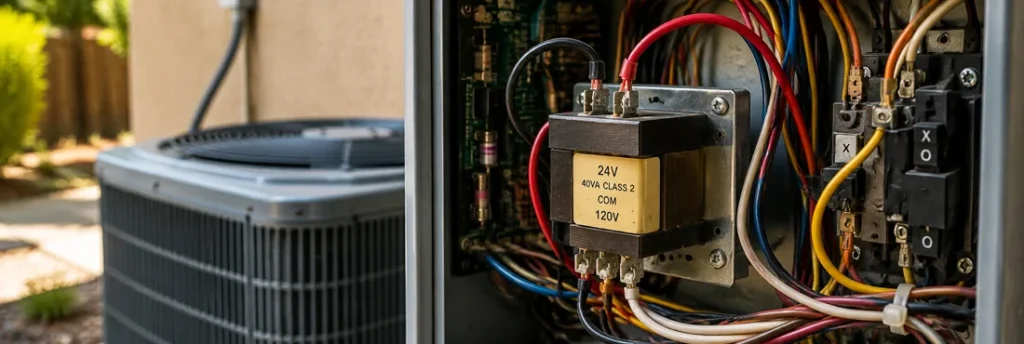
At this particular location, the building provides approximately 460-volt power, while part of the HVAC equipment requires a lower operating voltage.
A transformer is installed to step the voltage down from approximately 460 V to 208/230 V, allowing the equipment to receive the appropriate electrical supply.
When this transformer or its associated wiring develops a fault, the HVAC system may lose power completely.
Finding the Short Circuit
During the inspection, one of the first warning signs was the noticeable smell of overheated or burned electrical components.
The transformer’s primary electrical connections were then checked as part of the troubleshooting process.
Testing indicated a short circuit on the primary side of the transformer.
This finding also explained why the circuit breaker had tripped. The breaker was responding to an electrical fault and shutting down the circuit to protect the system.
Instead of repeatedly resetting the breaker, the correct approach is to locate the source of the electrical problem.
Why HVAC Breakers Trip
A tripped breaker can be caused by several different HVAC-related problems, including:
- Shorted electrical components
- Damaged or overheated wiring
- Transformer failure
- Loose electrical connections
- Compressor electrical problems
- Motor failures
- Excessive electrical current
- Ground faults
Because several different failures can produce similar symptoms, accurate testing is important before replacing components.
Why Proper HVAC Troubleshooting Matters
An AC system that is not cooling does not automatically mean that the air conditioner itself needs to be replaced.
Electrical problems can sometimes make a perfectly serviceable HVAC system appear completely dead.
Professional troubleshooting involves following the electrical circuit, checking voltage, inspecting components and connections, and identifying exactly where power is being lost.
In this case, the combination of a tripped breaker, loss of power, signs of overheating, and electrical testing helped trace the problem to the transformer circuit.
Finding the actual cause prevents unnecessary part replacement and allows the correct repair to be performed.
Never Ignore a Breaker That Keeps Tripping
If your HVAC breaker trips repeatedly, avoid continuously resetting it.
A breaker that trips again after being reset may indicate a short circuit, damaged component, wiring problem, or another electrical fault that requires professional diagnosis.
Warning signs can include:
- AC suddenly stops working
- No power at the HVAC equipment
- Breaker repeatedly trips
- Burning or electrical smell
- Unusual buzzing sounds
- Signs of overheating around electrical components
- System starts and immediately shuts down
Electrical faults should be diagnosed before the equipment is operated again.
HVAC Diagnostics & Repair in Los Angeles and Surrounding Areas
At ARD Engineering Group, we troubleshoot residential and commercial HVAC systems to identify the actual cause of cooling and electrical problems before recommending repairs.
Whether the issue involves an electrical component, transformer, compressor, controls, wiring, or another part of the HVAC system, proper diagnostics are the first step toward getting the system operating correctly again.
📍 Los Angeles & Surrounding Areas
Contact ARD Engineering Group to schedule HVAC diagnostics, repair, or service and request a FREE ESTIMATE.