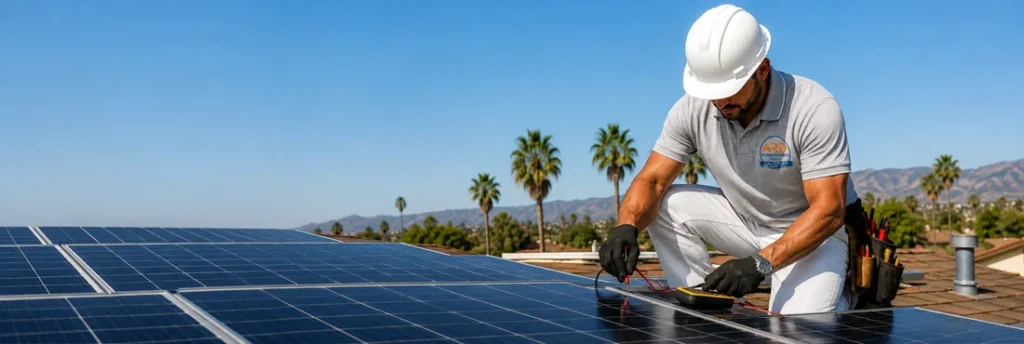
Solar panel repair in California may become necessary even with a well-designed system built to operate for many years.
When one part of the system develops a problem, solar production may decrease even though the panels still appear completely normal from the ground.
For homeowners in California, recognizing the early signs of a solar system problem can help prevent prolonged production losses and identify components that may need repair or professional maintenance.
Is Your Solar System Producing Less Energy?
Noticing lower solar production, inverter errors, or another problem with your system? Call ARD Engineering Group today at (818) 488-0703 to schedule professional solar system diagnostics and service.
A proper inspection can help determine whether the issue involves the panels themselves, electrical connections, the inverter, monitoring equipment, or another part of the system.
How Does a Residential Solar System Work?
Solar photovoltaic panels convert sunlight into DC electricity.
That electricity then travels through the solar electrical system to an inverter, which converts DC electricity into AC electricity that can be used by household appliances and electrical equipment. The California Energy Commission describes this same basic process for residential photovoltaic systems.
Depending on the installation, a residential solar system may include:
- Solar PV modules
- Inverter or microinverters
- Electrical wiring
- Disconnects
- Breakers
- Mounting equipment
- Monitoring equipment
- Utility interconnection equipment
- Battery storage, if installed
A problem with any of these components can potentially affect overall system performance.
Common Signs Your Solar Panels Need Service
Solar system problems aren’t always obvious.
Unlike an air conditioner that stops blowing cold air, a solar system may continue operating while producing considerably less electricity than expected.
Here are several signs worth paying attention to.
1. Unexpected Drop in Solar Production
One of the most useful indicators of a potential problem is an unexplained decrease in energy production.
Solar output naturally changes depending on:
- Season
- Weather
- Cloud cover
- Day length
- Shading
- Temperature
However, a significant reduction that cannot be explained by normal conditions may indicate a system problem.
Comparing production with previous months or similar periods from previous years can sometimes reveal changes that would otherwise go unnoticed.
2. Inverter Error Messages
The inverter is one of the most important components of a solar PV system.
It converts the DC electricity generated by the panels into AC electricity that can be used by the home.
If the inverter detects a problem, it may display:
- Error codes
- Warning lights
- Fault messages
- Communication errors
- Shutdown notifications
Ignoring inverter warnings can result in reduced or completely interrupted solar production.
Professional troubleshooting can determine whether the problem is related to the inverter itself or another component causing the inverter to report a fault.
3. One Section of the System Is Underperforming
Some solar installations allow homeowners to monitor individual panels or groups of panels.
If one section consistently produces significantly less electricity than surrounding modules, there may be a localized problem.
Possible causes can include:
- Panel damage
- Wiring problems
- Microinverter failure
- Connector problems
- Heavy shading
- Debris accumulation
- Electrical faults
System monitoring can be particularly useful because some electrical problems are impossible to identify simply by looking at the roof.
4. Visible Panel Damage
Solar panels are designed for outdoor conditions, but physical damage can still occur.
Potential problems include:
- Cracked glass
- Impact damage
- Damaged frames
- Loose mounting components
- Discoloration
- Damaged wiring
- Loose or exposed connectors
Roof-mounted solar panels should not be inspected closely without appropriate safety equipment.
If damage is visible from a safe location, professional inspection is the better option.
5. Solar Monitoring Stops Working
Modern solar installations often include online or app-based monitoring.
Monitoring allows homeowners to track system performance and identify unusual changes in electricity production.
If monitoring suddenly stops reporting information, the solar panels themselves may still be operating.
The problem could involve:
- Internet connectivity
- Monitoring hardware
- Inverter communication
- Software configuration
- Electrical equipment
However, because monitoring is an important tool for identifying performance problems, a prolonged loss of monitoring should be investigated.
6. Your Electricity Bill Changes Unexpectedly
A sudden increase in utility electricity consumption can sometimes indicate that the solar system is producing less power than before.
Of course, higher bills can have many other explanations, including:
- Increased air-conditioning use
- New electrical appliances
- EV charging
- Changes in utility rates
- Seasonal energy consumption
For this reason, an electricity bill alone cannot diagnose a solar problem.
But when higher grid consumption occurs together with lower reported solar production, further investigation may be worthwhile.
Wiring and Electrical Connection Problems
A solar installation includes multiple electrical connections exposed to temperature changes and outdoor conditions.
Problems may develop in:
- Connectors
- Junction boxes
- Wiring
- Disconnects
- Breakers
- Grounding components
- Inverter connections
Loose, damaged, or deteriorated electrical connections can affect system performance and may also create safety concerns.
Electrical troubleshooting should be performed by qualified professionals familiar with photovoltaic systems.
Shading Problems
Solar production depends heavily on access to sunlight.
A system that performed well when originally installed can gradually lose production if surrounding conditions change.
For example:
- Trees may grow taller
- New structures may create shadows
- New rooftop equipment may block sunlight
- Vegetation may begin shading lower-mounted panels
Even partial shading can affect system output depending on the equipment configuration.
Dirt and Debris
Dust, leaves, bird debris, and other material can accumulate on panel surfaces.
California conditions vary considerably by location, and some properties may experience more dust or airborne debris than others.
The California Energy Commission has noted panel cleaning as a common maintenance task used to minimize losses caused by soiling.
However, panels should not automatically be cleaned simply because they look dusty. The amount of production loss, roof accessibility, manufacturer recommendations, water quality, and safety should all be considered.
Do Solar Panels Need Regular Maintenance?
Solar PV systems generally have fewer moving components than many other home energy systems.
That doesn’t mean they should be completely ignored.
Periodic attention can help identify:
- Damaged panels
- Loose electrical components
- Inverter faults
- Wiring deterioration
- Mounting problems
- Abnormal production
- Monitoring issues
- Excessive debris
One of the easiest things homeowners can do is regularly review solar production data.
A gradual performance change may be easier to identify through monitoring than through a visual inspection.
What Does Professional Solar System Maintenance Include?
The exact service depends on the equipment and the problem being investigated.
A professional solar system inspection may include:
Visual Inspection
Technicians can inspect accessible system components for visible damage, deterioration, loose equipment, and other abnormalities.
Inverter Diagnostics
Stored error codes and operating information can provide valuable clues about system performance.
Electrical Testing
Electrical measurements can help identify problems involving circuits, wiring, connections, and system output.
Production Analysis
Current system production can be compared with expected performance and available historical data.
Monitoring System Inspection
If production data is missing or incorrect, communication and monitoring equipment may need troubleshooting.
Panel and Array Inspection
Panels can be checked for visible physical damage, shading issues, mounting problems, or other conditions affecting production.
Solar Panel Repair vs. Replacement
A problem with a solar energy system does not automatically mean the panels need to be replaced.
Many problems involve other components.
For example, reduced production may result from:
- A failed inverter
- A failed microinverter
- Wiring problems
- Damaged connectors
- Monitoring errors
- Shading
- A damaged individual panel
Proper diagnosis should come before recommending replacement.
If only one component has failed, repairing or replacing that component may restore system operation without replacing the entire solar array.
What About Older Solar Systems?
As solar installations age, certain components may eventually require more attention.
Panels themselves can continue producing electricity for many years, while electronic and electrical components may have different service lives.
Older systems may benefit from an inspection when:
- Production has noticeably decreased
- Monitoring no longer works
- The inverter frequently reports errors
- Roof work is planned
- Electrical equipment is being upgraded
- Battery storage is being added
- The original installer is no longer available
An inspection can help determine the actual condition of the system rather than assuming that age alone means replacement is necessary.
Can Solar Panels Be Repaired After Roof Work?
Roof replacement or major roof repair can require temporary removal of solar panels.
The process generally involves carefully disconnecting and removing the necessary equipment, completing the roofing work, and reinstalling the solar system afterward.
Before returning the system to service, electrical connections and system operation should be checked.
This is also a useful opportunity to inspect mounting equipment and other components that may normally be difficult to access.
Should You Repair a Solar System Yourself?
Solar panels may look simple from the outside, but a photovoltaic installation is an electrical power-generating system.
Solar arrays can produce DC voltage whenever sufficient sunlight reaches the panels.
Simply switching off one breaker does not necessarily mean every part of the solar system is electrically inactive.
For this reason, inverter replacement, wiring repair, electrical troubleshooting, and other significant solar repairs should be handled by qualified professionals.
How to Help Keep Your Solar System Performing Properly
Homeowners can take several simple steps to keep track of system performance:
- Check solar production periodically
- Pay attention to inverter warnings
- Keep monitoring access working
- Compare production with previous periods
- Watch for new shading around the property
- Have visible damage professionally inspected
- Address electrical faults promptly
The goal is not to constantly service the system but to recognize meaningful changes when they occur.