
What is a ground wire, and why is it important for your home’s electrical system? A ground wire provides a safe path for fault current and helps reduce electrical hazards.
Under normal operating conditions, a grounding conductor isn’t intended to carry the regular current powering your lights and appliances. Instead, it provides a path for fault current when something goes wrong.
Proper grounding works together with circuit breakers, wiring, bonding, and other protective components to help reduce electrical hazards.
Understanding what a ground wire does can make it easier to recognize why grounding is such an important part of a home’s electrical system.
What Is a Ground Wire?
A ground wire, more precisely called an equipment grounding conductor in many applications, is a conductor used as part of the electrical safety system.
Unlike the normal current-carrying conductors in a circuit, the equipment grounding conductor generally does not carry current during normal operation.
Its purpose becomes especially important when an electrical fault occurs.
If a damaged energized conductor contacts the metal housing of an appliance or another conductive surface, the grounding path helps carry fault current back toward the electrical source. This allows protective devices such as circuit breakers or fuses to operate and disconnect the circuit. OSHA describes the equipment grounding conductor as a safeguard that carries fault current back to the source so overcurrent protection can respond.
Why Is Electrical Grounding Important?
Grounding is one part of a larger electrical safety system.
Its purpose isn’t simply to «send electricity into the dirt,» as grounding is sometimes described. In residential electrical systems, equipment grounding helps create an effective fault-current path so protective devices can respond when energized conductors come into contact with metal equipment or other unintended surfaces.
That provides several important safety benefits.
Helps Reduce Electric Shock Hazards
Imagine that damaged wiring inside an appliance allows an energized conductor to touch the metal cabinet.
Without an effective grounding path, that metal surface could potentially remain energized.
If a person touches it while also providing another path for current, an electrical shock could occur.
Proper equipment grounding helps create a low-impedance fault path so sufficient current can flow to trip the breaker or operate another protective device.
Helps Circuit Breakers Respond to Faults
Circuit breakers aren’t only there to be switched on and off manually.
They are designed to interrupt the circuit when electrical conditions exceed safe limits.
An effective grounding path can help fault current return to the source so the breaker can recognize the abnormal condition and disconnect power.
The Electrical Safety Foundation International provides additional information about grounding wires, electrical panels, circuit breakers, and other parts of a residential electrical system in its guide to understanding your home electrical system.
Helps Reduce the Risk of Electrical Damage
Fault current traveling through unintended metal components can damage appliances, wiring, electrical boxes, and other equipment.
Proper grounding and bonding help control where fault current travels so the electrical protection system can operate as intended.
How Does a Ground Wire Work?
Under normal conditions, electrical current travels through the circuit’s normal current-carrying conductors.
The equipment grounding conductor remains available as a safety path.
If an energized conductor accidentally contacts the metal enclosure of an appliance, electrical box, or other grounded component, the grounding conductor provides a path back toward the source.
This fault current can then cause the circuit’s protective device to operate.
The important point is that the grounding conductor and the circuit breaker work together.
The ground wire doesn’t replace a breaker, and the breaker doesn’t replace proper grounding.
Both are parts of the electrical safety system.
Ground Wire vs. Neutral Wire: What’s the Difference?
Ground and neutral wires are sometimes confused because both ultimately relate to the electrical system’s grounded point.
However, they perform very different functions.
Neutral Wire
The neutral conductor normally carries return current during regular circuit operation.
In many residential circuits, electricity flows from the energized conductor through the electrical load and then returns through the neutral conductor.
Ground Wire
The equipment grounding conductor normally carries no current during proper operation.
Its job is primarily related to safety and fault conditions.
This distinction is important because ground and neutral conductors should not simply be treated as interchangeable wires.
Their connection points and purposes are governed by the design of the electrical system.
What Does a Ground Wire Look Like?
Equipment grounding conductors are commonly easy to identify.
They may be:
- Bare copper
- Green insulated wire
- Green wire with a yellow stripe
OSHA guidance similarly identifies equipment grounding conductors as commonly green, green with a yellow stripe, or bare.
Inside an electrical box, you may see the ground wire connected to:
- The grounding terminal of a receptacle
- A switch
- A metal electrical box
- A light fixture
- Other electrical equipment
However, older wiring systems may look different, and not every older home has modern equipment grounding conductors installed at every location.
Why Do Electrical Outlets Have a Third Prong?
The third opening on a standard three-prong receptacle is the grounding connection.
When a grounded appliance is plugged into the outlet, its grounding conductor connects through that third prong to the home’s equipment grounding system.
ESFI notes that the third grounding prong on a grounded receptacle helps reduce electric-shock risk and protect equipment from electrical damage.
This is why removing a grounding prong from a plug or using adapters incorrectly can defeat an important safety feature.
Grounding vs. Bonding
Grounding and bonding are closely related, but they don’t mean exactly the same thing.
Grounding generally refers to connecting the electrical system to earth through the grounding electrode system.
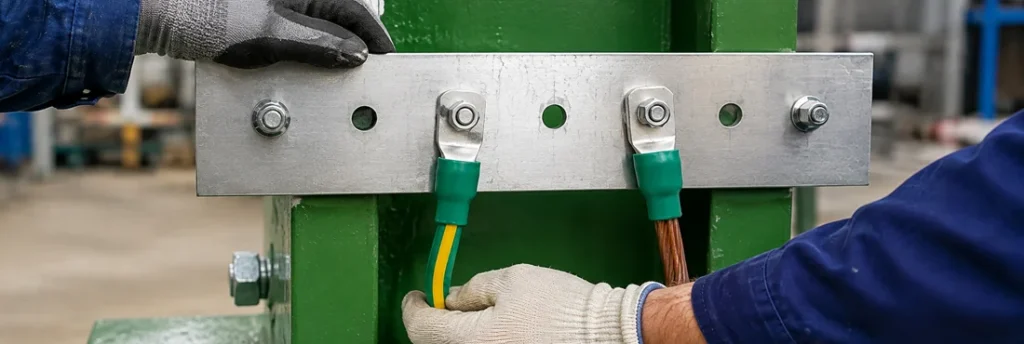
Bonding refers to electrically connecting conductive metal parts together so they remain at substantially the same electrical potential and provide an effective fault-current path.
For example, metal electrical boxes, equipment enclosures, and other conductive components may be bonded into the grounding system.
Proper bonding is important because a grounding conductor cannot provide effective protection if parts of the electrical system are not connected correctly.
Ground Wire vs. Ground Rod
Another common source of confusion is the difference between an equipment ground wire and a grounding electrode such as a ground rod.
They are related, but they serve different roles.
Equipment Grounding Conductor
This conductor provides a fault-current path for electrical equipment and circuits.
Grounding Electrode
A grounding electrode connects the electrical system to earth.
Ground rods are one common type of grounding electrode.
A home’s grounding system may include grounding electrodes, grounding electrode conductors, equipment grounding conductors, bonding connections, and other components working together.
Does a Ground Wire Protect Against Power Surges?
Not by itself.
Grounding is important to electrical safety, but a ground wire should not be viewed as a complete surge-protection system.
Power surges can come from utility switching, equipment operation, electrical faults, or lightning-related events.
Dedicated surge protective devices are designed specifically to limit transient overvoltages.
ESFI warns that circuit breakers, GFCIs, ordinary wiring, and typical power strips should not automatically be assumed to provide proper surge protection.
For homes with sensitive electronics, EV chargers, HVAC equipment, and other valuable electrical devices, whole-home surge protection may be worth considering.
Common Grounding Problems in Homes
Grounding systems can develop problems over time, especially in older properties or after electrical modifications.
Missing Ground Connection
Some older wiring systems were installed before modern grounding practices became standard.
An older two-prong outlet may be one visible indication that a grounding conductor isn’t present at that location, although the wiring should be properly inspected before drawing conclusions.
Loose Ground Connections
Grounding connections can become loose because of vibration, improper installation, corrosion, or previous electrical work.
A loose connection may prevent the grounding system from working as intended.
Improperly Replaced Outlets
Replacing an older two-prong receptacle with a three-prong outlet does not automatically create a ground connection.
A three-prong outlet should only be installed in a manner permitted by applicable electrical requirements.
Damaged Ground Conductors
Grounding wires can be cut, disconnected, damaged, or incorrectly modified during remodeling or electrical repairs.
Because ground wires don’t normally carry operating current, a damaged grounding conductor may not cause an immediate visible problem.
The circuit may appear to work normally until a fault occurs.
Corrosion
Moisture and environmental conditions can cause corrosion at electrical connections.
Corrosion may increase resistance or compromise the integrity of the grounding and bonding system.
Improper Bonding
Metal boxes, piping, service equipment, and other conductive components must be connected correctly where bonding is required.
Improper bonding can prevent fault current from returning effectively to the source.
Signs Your Home May Have a Grounding Problem
Grounding problems aren’t always obvious.
Possible warning signs can include:
- A shock or tingling sensation when touching metal appliances
- Older two-prong outlets
- Electrical modifications that appear poorly installed
- Damaged or missing grounding prongs on equipment
- Evidence of corrosion in electrical components
- Repeated electrical faults
- Electrical inspection identifying missing or damaged grounding connections
It is important to remember that symptoms such as flickering lights or breaker trips can have many causes and don’t automatically prove that the grounding system is defective.
Proper electrical testing is the safest way to determine what’s happening.
Can You Test a Ground Wire Yourself?
Simple plug-in receptacle testers can identify some common wiring conditions, but they cannot verify every aspect of a home’s grounding system.
More complete testing may involve:
- Ground continuity testing
- Voltage measurements
- Inspection of the service equipment
- Checking bonding connections
- Evaluating grounding electrodes
- Inspecting branch circuit wiring
Electrical testing should be performed with appropriate equipment and knowledge of the system.
A receptacle that appears to work normally may still have wiring or grounding problems that aren’t obvious from everyday use.
What About Older Homes Without Ground Wires?
Older homes may contain wiring systems that do not include equipment grounding conductors in the same way modern electrical systems do.
This doesn’t necessarily mean the entire house immediately needs complete rewiring.
The appropriate solution depends on the existing wiring method, condition of the electrical system, local requirements, and planned upgrades.
Possible solutions may include:
- Updating specific circuits
- Installing properly protected replacement receptacles where allowed
- Rewiring sections of the home
- Upgrading the electrical panel
- Adding new grounded circuits
A qualified electrician can inspect the existing system and recommend the appropriate approach.
Is Grounding the Same as GFCI Protection?
No.
Grounding and Ground-Fault Circuit Interrupter (GFCI) protection address electrical safety in different ways.
A GFCI monitors current flowing through a circuit and can disconnect power rapidly when it detects an imbalance that may indicate current is flowing through an unintended path.
Grounding provides an electrical fault path.
Both can contribute to safety, but one does not simply replace the other in every application.
Why You Shouldn’t Remove the Ground Prong From a Plug
Some older receptacles have only two slots, leading people to break off the third grounding prong of an appliance plug so it will fit.
This removes a safety feature built into the appliance.
The correct solution is to determine why the outlet isn’t grounded or whether an appropriate electrical upgrade is needed.
Modifying the plug does not improve the electrical system—it simply eliminates the appliance’s grounding connection.
When Should You Call an Electrician?
Grounding issues can involve electrical panels, wiring, bonding connections, receptacles, and grounding electrodes.
Professional inspection is recommended when:
- You receive shocks from appliances
- Your home has many older two-prong outlets
- Ground wires appear damaged or disconnected
- Electrical work was previously performed incorrectly
- You’re upgrading an electrical panel
- You’re installing major new electrical equipment
- You aren’t sure whether outlets are properly grounde
- An inspection identifies grounding or bonding deficiencies
An electrician can determine whether the problem is limited to one circuit or involves a larger part of the home’s electrical system.
Professional Grounding and Electrical Services
A grounding system is easy to overlook because it normally works silently in the background.
But when an electrical fault occurs, properly installed grounding and bonding can become an important part of the system’s protection.
If you’re unsure whether your outlets, electrical panel, or wiring are properly grounded, professional testing can identify missing connections, damaged conductors, improper bonding, and other electrical safety concerns.
ARD Engineering Group provides professional electrical diagnostics, grounding inspections, wiring repair, electrical panel services, preventive maintenance, and other residential electrical services throughout Los Angeles and surrounding areas.
A professional electrical inspection can help determine whether your home’s grounding system is operating as intended and whether any upgrades or repairs are recommended.